How to plan digs, prevent utility strikes, and keep crews out of the line of fire
Underground utilities keep a jobsite running, but they also hide high-consequence hazards just below the surface. A single strike can injure workers, trigger evacuations, and halt critical path work. Telecom, electric, water, sewer, and gas lines each carry unique risks, and the margin for error is small once equipment approaches the marks.
Conducting regular underground-utilities toolbox talks is one of the most effective ways to prevent strikes. These brief, focused discussions reinforce the steps that matter most: requesting and verifying locates, daylighting lines before excavating, working carefully inside the tolerance zone, and keeping people out of harm’s way. They also help crews align with OSHA excavation requirements in the U.S. and One-Call obligations across Canada.
This guide gives you everything you need to deliver a strong underground-utilities toolbox talk, from pre-dig planning and safe exposure methods to tolerance-zone practices, special cases like gas and electric, and the documentation that stands up in an audit. Use the downloadable materials on this page to run a 10–12 minute huddle, record the locate details, and keep your team strike-free.
Why underground utilities deserve a full toolbox talk
Hitting a buried line can injure workers, shut down a site, or evacuate a neighbourhood. Damage data shows the risk is persistent: the Common Ground Alliance reports that facility damages remain high across North America, with telecom and natural gas facilities accounting for the majority of reported incidents in recent years. Systemic root causes have stayed consistent, which means better planning and execution still move the needle.
Utility strikes are preventable. The basics are the same on both sides of the border: request locates before digging, verify locations by exposing lines safely, respect the tolerance zone, and keep people out of harm’s way. U.S. OSHA places these expectations in Subpart P for excavations, and provincial law in Ontario makes locate requests a legal obligation through Ontario One Call.
What counts as an “underground utility” on your site
Underground infrastructure includes electric, gas, steam, communications, water, sewer, and private services inside the property line. OSHA calls for determining the estimated location of utility installations before opening an excavation and for protecting or supporting those installations once exposed. That covers public lines and “unknowns” like abandoned services or private laterals.
In Ontario, the Ontario Underground Infrastructure Notification System Act defines a “locate request” as the official process to notify infrastructure owners and receive marking and documentation before you dig. The legal expectation is clear: you notify, you wait for marks and documentation, and you keep those records available on site.
The pre-dig process that actually prevents strikes
1) Submit a locate request and wait for valid marks
Call or click before you dig. In the U.S., contact 811; in Ontario, submit a request to Ontario One Call. You’ll receive markouts and locate documentation that identify the approximate centreline of underground facilities and the validity window for those marks. Ontario’s rules set service levels and obligations around completion deadlines and documentation that show the drawing, completion date, and validity period. Keep these records with your daily paperwork.
2) Review drawings, scope, and the work area together
Align the excavator operator, foreperson, and signaller. Walk the site with the locate drawings and marks visible. Confirm which utilities are expected, where conflicts are likely, and which parts of the work fall inside a tolerance zone. CGA Best Practices recommend a pre-excavation meeting when conflict potential is high.
3) Expose lines safely to verify location (“potholing” / “daylighting”)
OSHA requires exposing underground installations to verify location when excavation approaches the estimated area. Acceptable methods include careful hand digging or vacuum excavation. OSHA has explicitly recognized hydro-vacuum excavation as an acceptable method for uncovering utilities under §1926.651(b)(2), provided it is performed safely.
4) Respect the tolerance zone and proceed at reduced energy
Once marks are in place and a facility is daylighted, treat the tolerance zone like a slow-work envelope. Best practices call for non-destructive methods or controlled excavation with a spotter and signaller until the line is fully identified and protected. The exact width of the tolerance zone can vary by jurisdiction or asset owner, which is why you review the locate terms and utility owner requirements before you dig.
Controls you can see in the field
Marking and documentation
Keep the locate paperwork with the crew. Document when marks were applied, who applied them, and the validity window. In Ontario, One Call rules specify mandatory completion deadlines for standard requests and spell out excavator obligations around timing and cooperation; those rules support your due-diligence audit trail.
Safe exposure and support
When a line is exposed, support or protect it so trench walls, equipment, or spoil do not damage it. OSHA’s Subpart P calls for supporting underground installations that are exposed during excavation operations. That includes bracing, padding, or temporary protection boards, depending on the utility owner’s requirements.
Excavator control and signalling
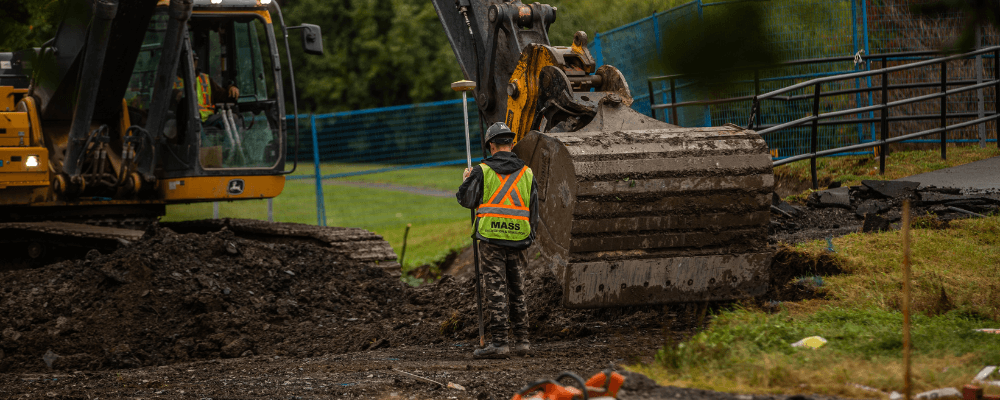
Use a single signaller with clear hand signals when working near marks or within a tolerance zone. Maintain line of sight at all times and stop if sight is lost. This transfers the plan from paper to the cab and reduces last-second guesswork near critical assets. (See your Excavator Hand Signals toolbox talk for a shared signal set.)
Traffic and public protection
Set barricades and signage if your work is near public rights-of-way. OSHA requires high-visibility garments when workers are exposed to public vehicular traffic; beyond compliance, controlling pedestrian flow keeps bystanders out of potential gas release or arc flash zones if something goes wrong.
Tolerance zones and why they matter
The tolerance zone is a buffer on either side of the marked facility. Within this zone, you do not rip with full bucket force or auger blind. You use careful methods until the line is visible and protected. CGA’s Best Practices detail how tolerance zones reduce damage rates when combined with daylighting and communication with the facility owner. If the locate note says a larger zone is required, follow the stricter requirement.
Typical failure points that lead to strikes
Bad assumptions about depth. Depth is not guaranteed. Frost, previous grading, or earlier work can change cover. Rely on exposure, not guesswork. OSHA’s rule is to determine estimated location and to safely expose when you approach it.
Expired or disturbed marks. Rain, grading, or traffic can erase or shift marks. If marks are unclear or the validity window has lapsed, stop and refresh the locate. Ontario’s rules and most utility owner terms include validity periods for markouts and documentation.
No pre-excavation meeting. Crews start digging without aligning on plan, signals, and hot zones. CGA recommends pre-excavation coordination especially where congestion is high.
Aggressive digging inside the tolerance zone. Full-power excavation near marks is a common root cause. Damage trends in DIRT show the same primary causes year after year, which is why tolerance-zone practices exist.
Special cases: gas, electric, and private services
Natural gas. Treat gas as immediately hazardous to life and property. If you damage a gas line or smell gas, evacuate to a safe distance, eliminate ignition sources, and contact the utility and emergency services. CGA data shows gas facilities represent a large share of reported damages.
Electric. Underground electric contact can arc without warning. OSHA requires determining location and protecting installations; once exposed, pad, bridge, or otherwise protect the cable and keep metal buckets and teeth away. Never assume a cable is de-energized without confirmation from the owner.
Private services. Not all lines are covered by public one-call. Facility owners may only mark to the demarcation point, leaving private laterals unmarked. Plan for private locates on campuses, malls, or industrial sites, and use vacuum exposure where maps are uncertain. CGA Best Practices address private facilities and the need for supplemental locating.
Training and documentation that stand up in an audit
Briefing checklist. Use a one-page Pre-Excavation Locate & Pothole Checklist: locate request number, drawings in hand, marks verified, tolerance zones identified, exposure method selected, signaller assigned, emergency contacts posted. (Host this on your page as a download.)
Daily records. Attach locate documentation to the day’s work order. Note any refreshes or remarking. Ontario One Call’s rules and statute make this paper trail easy to defend if questioned.
Operator drills. Run short practice reps: stop at tolerance zone, switch to vacuum or hand exposure, re-establish signals, and proceed at reduced energy. Tie this to your Excavator Hand Signals standard so the crew speaks the same language.
Subpart P refreshers. Reinforce OSHA’s excavation basics alongside utility-strike prevention: access/egress for trenches ≥ 4 ft, traffic protection, inspections, and soil protection. Utility damage prevention lives inside the same safe-excavation framework.
Frequently asked questions
Do we still need to pothole if the marks look perfect?
Yes. Marks show the approximate location. OSHA expects you to safely expose the installation when you approach the estimated area. Vacuum excavation is an acceptable method when done safely.
What if the locate window expires during a long job?
Stop and request a refresh. Ontario One Call rules specify timelines and validity; many utility owners require remarking after weather, grading, or time lapse. Keep current documentation on site.
How wide is the tolerance zone?
It varies by jurisdiction and utility owner and is measured from the marks to either side. Treat it conservatively and verify in the locate notes or owner requirements. CGA Best Practices describe the concept and its role in damage reduction.
Is hydro-vac always required?
Not always, but it is often the safest way to expose congested or critical facilities. OSHA recognizes vacuum excavation as acceptable for uncovering utilities when performed safely; owners may require it near certain assets.
Who calls if we hit a line?
Follow your emergency plan. Stop work, evacuate if gas or electric contact is suspected, secure the area, and notify the facility owner using the numbers on your locate documents. Document the incident and corrective steps for your internal program.
Supervisor checklist you can audit against
- Locate request submitted; drawings and validity window on site.
- Pre-excavation meeting completed; signaller assigned.
- Tolerance zones identified; exposure method selected.
- Underground installations supported or protected when exposed.
- Traffic and bystanders controlled; high-visibility garments used as required.
- Daily documentation attached to work order; refresh requested when marks are disturbed or expired.
Key takeaways
- Request and receive valid locates before digging; keep documentation with the crew.
- Expose and verify lines inside the tolerance zone; hydro-vac and hand digging are accepted methods.
- Support exposed utilities, control energy near them, and use a dedicated signaller while working in conflict areas.
- Refresh marks if they are disturbed or expired and document every step.
Damage trends haven’t gone away; doing the fundamentals every time prevents the same root causes from repeating.