Quick Answer (TL;DR)
Daily lockout/tagout (LOTO) inspections ensure every energy source on a piece of equipment is identified, isolated, locked, and verified before work begins. OSHA’s control of hazardous energy standard (29 CFR 1910.147) requires employers to prevent unexpected energization during servicing. A structured daily checklist makes the process consistent, auditable, and easier for crews to follow, especially when verifying isolation, confirming zero energy, and restoring equipment safely.
Why Does a Daily LOTO Inspection Matter?
Lockout/tagout is one of the most effective measures for preventing injuries caused by hazardous energy on construction and industrial jobsites. Equipment that contains mechanical motion, electrical power, stored pressure, steam, hydraulic force, or thermal energy can behave unpredictably if isolation is incomplete or verification is skipped. A daily inspection reduces the chances of those failures by reinforcing the same safe sequence every time: understand the equipment, isolate energy, verify zero state, perform the work, and restore the system deliberately.
Small oversights, including a tag that’s hard to read, a lock that isn’t attached correctly, or a valve that hasn’t fully closed, can result in unexpected startup or movement. A daily checklist keeps the process uniform, traceable, and defensible during audits or incident reviews, and it helps supervisors confirm that the team followed every required step.
What Does OSHA Require for Lockout/Tagout?
OSHA’s LOTO standard, 29 CFR 1910.147, outlines the essential elements of a compliant energy-control program. Employers must create written procedures for isolating hazardous energy, ensure that equipment capable of being locked out uses proper lockout devices, and guarantee that only authorized employees apply or remove locks. Before work begins, crews must verify that all energy sources have been effectively isolated and that no hazardous energy remains.
OSHA also requires periodic inspections of these procedures to ensure they are followed correctly. A daily field-level checklist supports these expectations by reinforcing the roles of authorized employees, notifying affected employees, and ensuring that all isolating devices, such as breakers, valves, and disconnects, are used properly and documented consistently.
What Should a Daily LOTO Inspection Include?
A thorough LOTO inspection follows a predictable sequence. While the equipment may differ from job to job, the core steps remain the same: prepare the system, shut it down, isolate all energy sources, control stored energy, verify zero energy, maintain lockout during the work, restore equipment safely, and document the entire process.
What Preparation Is Required Before Lockout/Tagout?
Preparation begins with clearly identifying the equipment or system being serviced and locating every associated energy source. This includes sources that are easy to miss, such as mechanical tension, suspended components, or residual hydraulic pressure. Workers should review the written or job-specific procedure together, clear the area of unnecessary personnel, and notify affected employees before shutdown. Confirming that proper lockout devices, hasps, and tags are available prevents improvisation once isolation begins.
How Should Equipment Be Shut Down Before LOTO?
Shutdown must follow the manufacturer’s or site-specific instructions. The goal is to bring the equipment to a complete stop before any isolation work begins. Even minor rotational or coasting movement, like a fan blade or drive shaft slowing down, creates risk if an isolating device is operated too soon. A daily inspection confirms the equipment has been turned off properly and has come fully to rest.
How Do You Isolate All Energy Sources During LOTO?
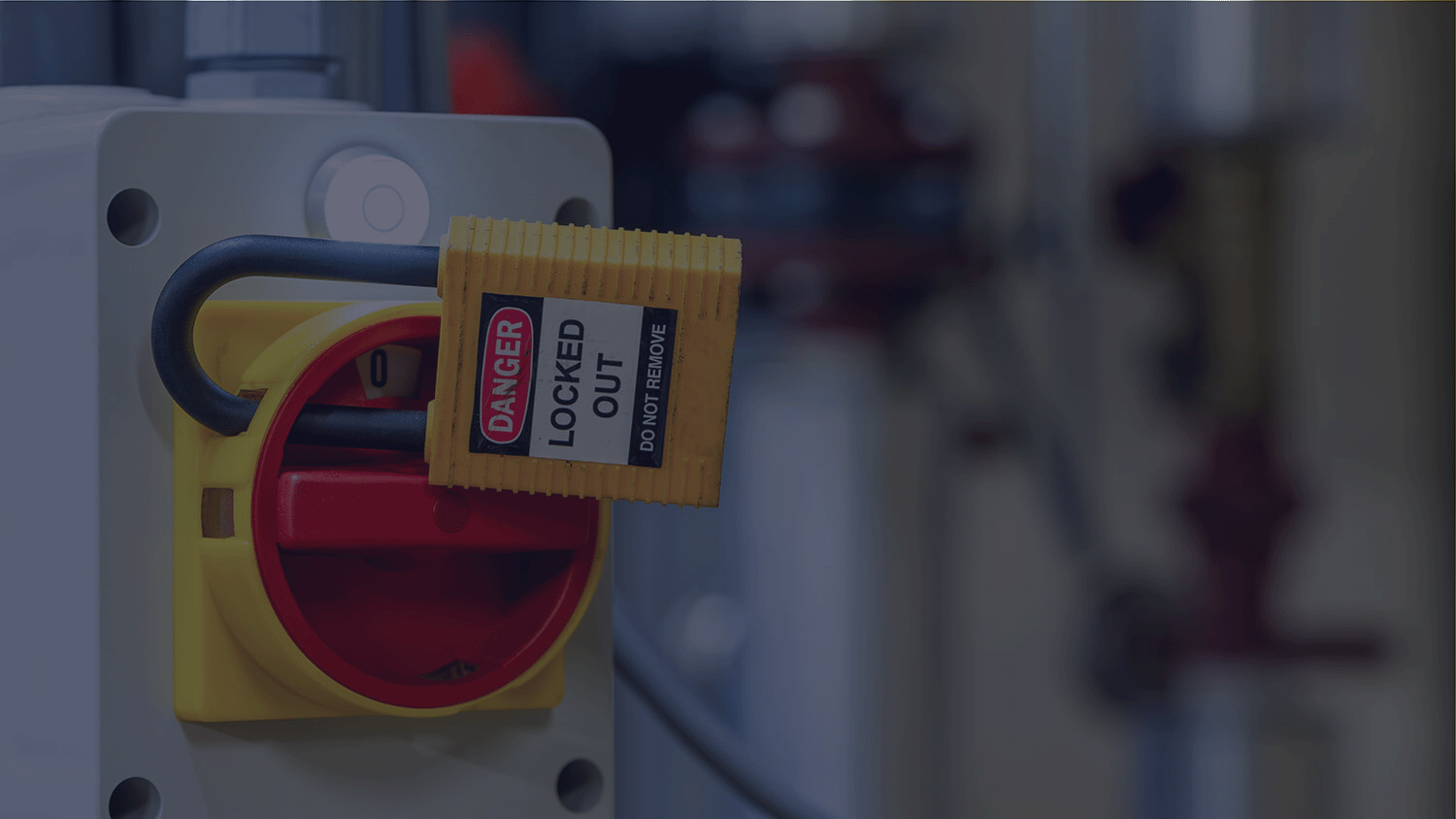
Isolation requires placing every energy-isolating device into its safe position and securing it. Breakers are opened, valves are closed, and disconnects are positioned to stop all motion or power flow. Lockout devices are applied at each point, and each authorized employee attaches their own lock and key. Tags must be completed clearly with the worker’s name, date, and purpose of the lockout.
A foundational OSHA principle applies here: each worker maintains personal control of their own lock and key. No lock should ever be removed by someone other than the person who installed it.
How Do You Control Stored or Residual Energy?
Even after isolation, hazardous energy may remain. Workers must release or secure stored energy so the equipment cannot move or energize unexpectedly. This may involve bleeding hydraulic lines, relieving pneumatic pressure, discharging capacitors, blocking gravity-loaded components, or restraining springs and flywheels.
Common sources of residual energy include:
- pressure or vacuum trapped in lines
- elevated parts held in place by gravity
- tension in springs or mechanical assemblies
- electrical capacitance
Neutralizing these hazards is essential before any work begins.
How Do You Verify a Zero-Energy State Before Work Begins?
Verification confirms whether the equipment is truly de-energized. Crews attempt a controlled restart to ensure nothing responds, and they use proper testing instruments—meters, gauges, or testers—to confirm the absence of voltage, pressure, or motion. OSHA emphasizes that verification is mandatory, not optional. Documenting this step provides proof that the equipment was safe before work started and helps prevent one of the most common LOTO failures: assuming isolation worked without testing it.
What Needs To Be Checked During the Work Itself?
LOTO remains in effect throughout the job. Locks and tags must stay visible and intact, and no one may remove another worker’s lock for any reason. Long-duration work may require mid-shift checks, especially when there is potential for pressure buildup or unexpected attempts to re-energize equipment by other teams. Monitoring for secondary hazards ensures the system stays in a true zero-energy state while work continues.
How Should a System Be Safely Restored and Re-Energized?
Restoration requires the same level of attention as isolation. Workers must remove tools, parts, and materials from the area; reinstall guarding and protective covers; and ensure all personnel are clear. Each authorized employee removes their own lock according to OSHA’s personal-control requirement. Once the equipment is re-energized following the appropriate protocol, affected employees must be notified that the system is back online. Restoration should never be rushed, as this is one of the stages where last-minute errors are most likely.
What Documentation Should a LOTO Inspection Include?
Documentation creates an auditable trail that confirms each step of the LOTO process was followed. A complete entry typically includes the equipment involved, lock numbers, names of authorized employees, start and end times, and any deficiencies or near misses. Supervisor sign-off helps validate that the process was performed consistently and reinforces accountability across the team.
Where Can I Download a Daily LOTO Inspection Checklist?
You can standardize every step of this process using the Daily LOTO Inspection Checklist, designed for supervisors, foremen, and authorized employees who need a clear, repeatable routine for hazardous-energy control.
👉 [Download the Daily LOTO Inspection Checklist (Free PDF)]
The checklist follows the structure of OSHA 1910.147, supports consistent daily practices, and helps crews avoid missed steps that lead to incidents or audit deficiencies.
What Are the Key Takeaways?
A daily lockout/tagout inspection reinforces OSHA’s requirements for hazardous-energy control and helps prevent incidents caused by incomplete isolation, skipped verification, or unclear tagging. A standardized checklist keeps the process consistent, observable, and easy to manage, giving supervisors a reliable way to confirm that each step—preparation, isolation, verification, restoration, and documentation—was completed correctly.
Frequently Asked Questions About LOTO
Q: What is a LOTO inspection?
A: A LOTO inspection ensures that equipment has been identified, isolated, locked out, verified, and restored safely before and after servicing.
Q: Does OSHA require lockout/tagout?
A: Yes. OSHA 29 CFR 1910.147 requires employers to develop and enforce procedures for controlling hazardous energy during servicing and maintenance.
Q: How often should LOTO procedures be inspected?
A: OSHA requires periodic inspections, and many companies conduct daily checks as part of their regular safety routine.
Q: Who can perform LOTO?
A: Only authorized employees—those trained and designated to apply locks and tags—may perform lockout/tagout.